
Identifying and removing ceramic coating high spots requires careful visual inspection and timely leveling using a microfiber towel or a light polish. These uneven, dark, or iridescent residues occur when excess coating isn’t completely wiped away during the flashing phase. To fix them, you must either reactivate the area with fresh coating if caught early, or machine polish and reapply the protectant if it has fully cured.
Achieving a flawless, glass-like finish demands absolute precision and an optimized detailing environment. For passionate automotive enthusiasts, understanding this chemical behavior is the key to preventing installation errors.
Understanding Ceramic Coating High Spots
When a liquid ceramic coating is applied, its solvents evaporate in a process called “flashing.” This allows active ingredients like Silicon Dioxide or Silicon Carbide to cross-link and bond with the paint’s pores.
A high spot occurs when excess material is missed during buffing. Instead of curing into a clear, micron-thin protective barrier, the pooled product hardens into a thick, uneven patch that ruins the paint’s mirror-like reflection. Catching these spots early prevents the need for aggressive machine polishing later.
How to Identify High Spots During the Installation Process
Detecting high spots before they fully lock down requires specialized techniques and specific environmental controls. Once the cross-linking process finishes, these areas become incredibly durable, making early detection a top priority for any detailer.
Visual Indicators by Vehicle Color
High spots present themselves differently depending on the color of the paint you are working on. Use the reference table below to know exactly what to look for:
| Vehicle Paint Type | Common Visual Symptoms | Best Viewing Angle |
| Dark Colors (Black, Blue, Grey) | Dark, oily smudges; rainbow or iridescent “oil slick” effects. | Isolate at a 45-degree angle to the light source. |
| Light Colors (White, Silver) | Dull, hazy, or cloudy patches; localized loss of crisp reflection. | Look down the body lines parallel to the light panel. |
| Metallic / Pearlescent | Multi-colored distortion; a “thick” look that hides metallic flake pop. | Direct overhead diffused inspection light. |
Specialized Lighting Requirements
Standard overhead garage lighting or direct, harsh sunlight is rarely sufficient for identifying high spots. Instead, rely on multi-spectrum LED inspection lights or diffused, warm-toned lighting arrays. When inspecting the panels, look at the paint from multiple angles specifically tracking the reflection of the light source across the panel. High spots frequently manifest as dark, smudged patches on darker vehicles, an iridescent rainbow effect, or hazy, cloudy sections on lighter vehicles.
Tactile Feedback and Timing
While visual inspection is your primary defense, keeping meticulous track of your flashing windows is equally critical. Flash times vary based on ambient temperature and relative humidity. In dry, arid climates, coatings flash significantly faster than they do in coastal, humid regions. If your microfiber towel begins to grab or drag heavily across a section during the leveling phase of a ceramic coating in Tucson, AZ, it is a clar warning sign that the product is setting up rapidly and requires immediate, uniform leveling.
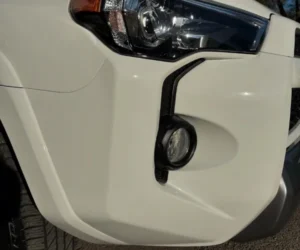
How to Remove Ceramic Coating High Spots: A Step-by-Step Guide
The strategy used to remove a high spot depends entirely on how long the coating has been allowed to cure. Managing these corrections with a disciplined approach ensures you never sacrifice the underlying clear coat.
Step 1: The Immediate Wipe-Down (Within 10–20 Minutes)
If you spot a high spot within minutes of application, the coating is still relatively soft and responsive to solvent manipulation.
- Take a clean, high-gsm microfiber towel dedicated to leveling.
- Apply firm, flat, linear pressure across the high spot to level out the excess residue.
- Flip the towel to a fresh side and buff the area completely clear.
Step 2: Solvent Reactivation (Within 1–2 Hours)
If the high spot has begun to tack up and a dry microfiber towel simply glides over it without leveling the ridge, you can leverage the chemistry of the coating itself to fix it.
- Apply a small, fresh drop of liquid ceramic coating directly to an applicator pad.
- Gently work the fresh product over the high spot. The active solvents in the fresh liquid will temporarily re-liquify and soften the partially cured high spot beneath it.
- Immediately take a clean microfiber towel and buff the entire area, blending the old and new product seamlessly into a flat, uniform layer.
Step 3: Abrasive Machine Correction (Post-Cure / After 24 Hours)
Once a ceramic coating has completely cured, it transforms into a highly chemical-resistant, hardened shell. At this stage, solvent reactivation will no longer work. The only way to remove the high spot is via mechanical leveling.
- Tape off the surrounding areas to isolate the defect.
- Using a dual-action (DA) polisher paired with a fine finishing pad and a light, non-silicone finishing polish, perform a few controlled passes over the high spot.
- Wipe the area down with an Isopropyl Alcohol (IPA) panel prep spray to remove any polishing oils.
- Inspect the area under dedicated detailing lights to confirm the high spot is completely gone.
- Reapply a thin, even layer of the ceramic coating to the freshly polished section, ensuring proper overlap with the surrounding coated panel to maintain seamless protection.
Proactive Strategies to Prevent High Spots
Implementing a strict, repeatable workflow eliminates the variables that lead to installation errors.
The Three-Towel System
Never rely on a single microfiber cloth to apply and level a coating. Establish a disciplined zone system:
- Towel 1 (The Initial Level): This towel removes 80% of the heavy excess product immediately after the flash window.
- Towel 2 (The Secondary Buff): A clean, low-pile towel used to pick up any remaining residual oils or faint streaks.
- Towel 3 (The Final Inspection Buff): A plush, high-gsm microfiber used exclusively for a final sweep of the panel to ensure absolute clarity.
Environmental Control
Controlling your working environment reduces unpredictable flash behavior. Ideal conditions consist of a temperature-controlled space between 60°F and 75°F with low to moderate humidity. Working out of a dedicated facility shields the vehicle from airborne dust, shifting sunlight, and wind-driven debris, all of which interfere with the leveling process and distort your view of the paint surface.
The Value of Professional Ceramic Coatings
While DIY kits exist, they are often diluted versions of industrial-grade formulas designed to flash slowly to minimize amateur errors. True professional-grade ceramic coating in Tucson delivers an unmatched durability and protection that DIY products simply cannot replicate.
When applied correctly, these elite formulas cross-link perfectly with the clear coat, creating an ultra-hydrophobic surface. This dynamic hydrophobic effect simplifies future cleaning and maintenance, allowing road grime, mud, and hard water spots to wash away with minimal effort.
People Also Ask
Will high spots in ceramic coating go away on their own over time? No, high spots will not disappear on their own. Because professional ceramic coatings are engineered for extreme durability and chemical resistance, a high spot will remain visible for years unless it is mechanically removed via machine polishing.
Can you just apply another layer of ceramic coating over a high spot to fix it? No. Adding another layer of ceramic coating over an existing high spot will only trap the imperfection underneath and make the uneven surface even more pronounced. The high spot must be completely leveled or polished away before any additional product is applied.
How long do I have to fix a ceramic coating high spot before it hardens completely? The exact window depends heavily on ambient temperature and humidity. Generally, you have a 10-to-20-minute window to easily wipe it away, and up to 1 to 2 hours to reactivate it with fresh product. After 24 hours, the coating cures fully, and mechanical polishing becomes mandatory.
What happens if I leave a high spot on my car’s paint? Leaving a high spot will not damage your underlying vehicle paint, but it will remain an unsightly aesthetic defect. It will look like a dark smudge, a cloudy patch, or a rainbow-like streak that disrupts the uniform gloss and mirror-like reflection of your vehicle.
Secure Premium Care for Your Vehicle
Achieving a flawless, competition-grade finish requires a blend of deep technical knowledge, specialized equipment, and an environment explicitly built for perfection. At Aesthetic Auto Spa, we eliminate the marketing fluff and gimmicks to deliver industry-leading protection, restoration, and vehicle care solutions. We pride ourselves on executing every service to the highest standards, with absolutely no shortcuts.
True car enthusiasts value genuine automotive care. Our trusted service provides complete confidence that your investment is secure. Serving discerning clients throughout the region, including the Catalina Foothills, we deliver long-lasting, dependable ceramic coating solutions tailored to your collector or performance vehicle.
Don’t leave your vehicle’s finish to chance or risk the headaches of improper DIY installation. Experience the Tucson ceramic coating solutions that automotive enthusiasts rely on for pristine, enduring results.
Contact us today to explore our comprehensive offerings, from climate-controlled concierge vehicle storage to elite paint protection, and schedule your vehicle’s transformation.